
How to Check Criminal History in Durham County
No single search produces a complete Durham County criminal history. The North Carolina eCourts Portal is the best first stop for Durham court discovery, while the Durham Clerk of Superior Court holds the official case file. The Durham County Sheriff's current-inmate list covers recent Durham custody. A fingerprint-based SBI Right to Review covers a person's own state record, including Durham events. Begin with a full legal name, spelling variants, an approximate date, and any known Durham docket number. Then compare the filing location and dates before treating two entries as the same person.
The Durham source should match the question. A Durham case outcome belongs with the clerk. Current Durham confinement belongs with detention staff. A Durham officer's report belongs with the agency that wrote it. A statewide identity review of Durham events belongs with the SBI. This split matters in Durham County because a booking row may appear before a case reaches the public court search, and a person may leave Durham jail while the case remains open.
- Search North Carolina eCourts Portal by name or case number and filter the location to Durham County.
- Compare each Durham result's name, filing place, case type, dates, and docket number. Do not rely on name alone.
- Check the Durham Sheriff's current-inmate list when the arrest or confinement is recent.
- Use the Durham clerk's public terminal or request the file when Portal lacks an old document, final disposition, or official copy.
- Order a fingerprint-based SBI Right to Review when checking your own statewide North Carolina record or correcting an identity-linked entry.
Durham eCourts Criminal Case Search
North Carolina completed its statewide eCourts conversion in October 2025, so older claims that Durham County has no online court information are now out of date. Portal still serves as a Durham discovery tool, not a certified background-check product. Use the Durham location filter because Durham, Chapel Hill, and Raleigh names can cross county lines. A city label or mailing address does not establish where a Durham charge was filed.
| Portal field | How to use it | Why it matters |
|---|---|---|
| Smart Search | Enter a party name or case number | A docket number is more exact than a name |
| Advanced filters | Narrow a broad result set | Separates similar names and case groups |
| Location | Select Durham County | Confirms the filing court |
| Case category | Choose criminal or infraction when shown | Removes unrelated civil records |
| Search and Pay | Review public case data or eligible payments | Payment access does not certify the file |
The North Carolina Judicial Branch eCourts overview explains the statewide system. If a Durham County case is missing, use the Durham courthouse terminal, ask the Durham clerk about archived material, or check whether the Durham event is too new to have reached court.
The Judicial Branch's Durham courthouse page provides the source view used here. View the official Durham County Courthouse information before planning a records visit.
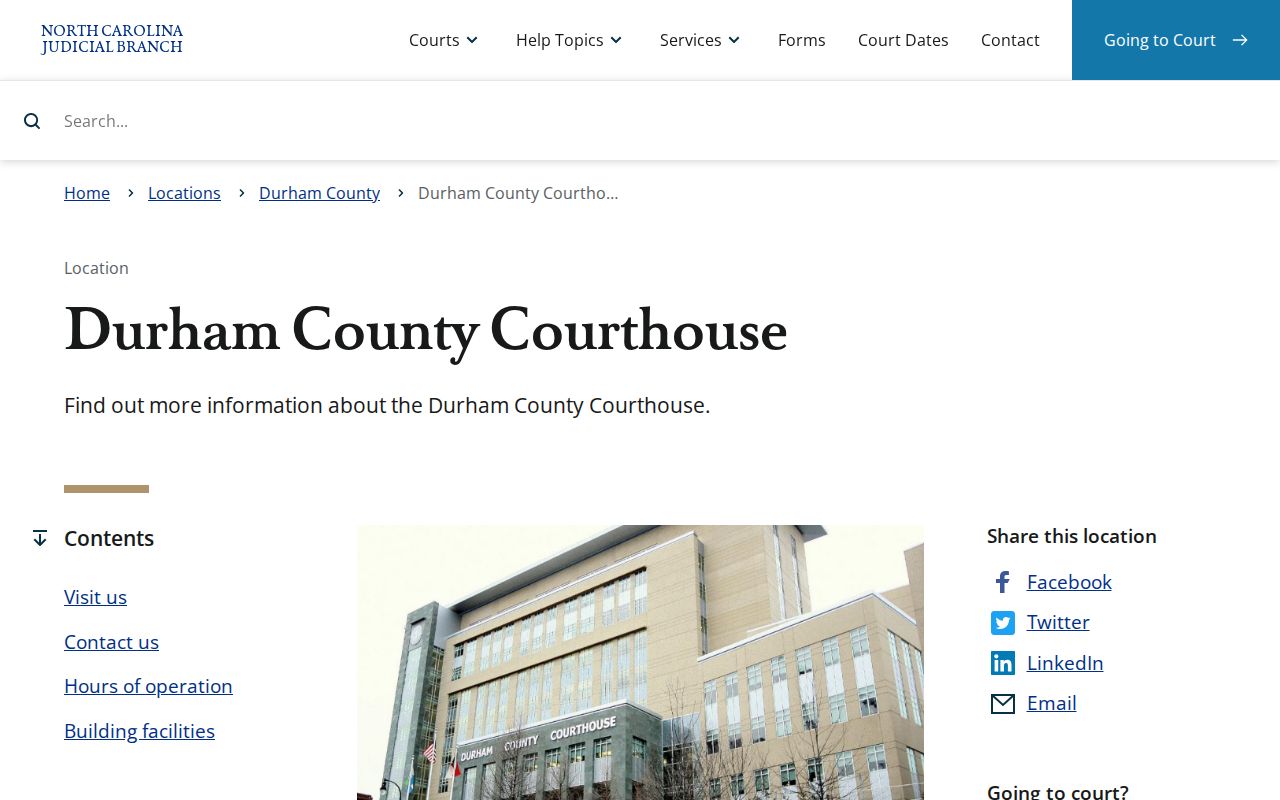
The courthouse remains the authority for official copies even when Portal supplies a useful first look at the docket.
Official North Carolina Background Checks
The North Carolina State Bureau of Investigation does not offer an unrestricted public name-search portal. A person may request a fingerprint-based Right to Review of their own North Carolina criminal history, including Durham events. The state-only review costs $14 and returns an SBI response. The Durham request packet requires the official form, fingerprints, identification materials, payment, and mailing information. Call the local Durham fingerprint provider before visiting because capture fees, appointments, card supply, and payment methods can vary.
A certified Durham County court-record search is different. The Durham clerk charges $25 to search county court information. The direct FBI Identity History Summary costs $18 and is also subject-only. Free Portal access and the Durham clerk's public terminal can help locate a case, but neither free Durham search becomes an SBI rap sheet or FBI file. Fingerprints provide the strongest identity match when reviewing your own record; a Durham court name search can still join unrelated people with similar names.
Durham Criminal Records Cost Comparison
Price reflects the Durham record product, not a simple good-better-best scale. A no-cost Durham County Portal search can reveal filed cases. A Durham clerk search can certify county court results. An SBI review follows the Durham requester's own fingerprints through the statewide repository. The FBI product reaches the federal identity-history system. Choose by scope and purpose, then confirm current instructions on the official page before paying.
| Official channel | Published fee | Scope |
|---|---|---|
| eCourts Portal or clerk terminal | Free to search | Public court discovery |
| Durham clerk certified search | $25 | Durham County court records |
| SBI Right to Review | $14 | Requester's own North Carolina history |
| Direct FBI Identity History Summary | $18 | Requester's own national identity history |
Fingerprint collection may add a separate local fee. The research did not identify a dependable statewide vendor address in Durham County, so verify an authorized capture site and its current terms rather than relying on an old directory.
Types of Criminal Records
Durham County agencies create separate products as a Durham matter moves from an incident to a final result. Durham police or sheriff reports describe what an agency received or investigated. The Durham detention record shows intake and custody. The Durham court file tracks prosecution. The SBI record links fingerprint-supported Durham arrest cycles to dispositions reported by courts. None is a complete substitute for the others.
- Incident and investigation reports: Held by Durham Police, the Sheriff, campus police, Highway Patrol, or the agency that created them.
- Arrest and booking records: Show alleged violations, confinement, listed charges, bond, release, and related docket details.
- Criminal case files: Preserve filed charges, events, hearings, pleas, dispositions, judgments, and public financial entries.
- SBI histories: Organize fingerprint-based state arrest cycles and matched court outcomes for identity review.
- Supervision and registry records: NCDAC publishes eligible incarceration or community-supervision data, while SBI operates the state sex offender registry.
Warrants also require care. Durham County has no verified unrestricted public active-warrant name list. Public case information may show related process, but active or sealed process can remain outside a web result.
Durham County Jail Record Trail
The Durham Sheriff's Inmate Population Search is the most direct public source for current Durham County custody. It is a Durham roster, not a rich search form. Entries can show a surname-first name, dates confined and charged, a release date or incarceration marker, abbreviated charge text, bond type and amount, a Durham court docket number, and days held for each charge. One person may have several Durham rows. A zero amount on one row does not prove release because another hold or bond may apply.
A Durham name link routes to VINE for custody notifications instead of a fuller photo profile. The Durham roster does not display every field common on commercial jail sites, and it should not be treated as a mugshot gallery. Use the posted last-updated time as a freshness clue, then call Durham detention at 919-560-0897 when identity or status is unclear. A historical Durham booking that has fallen off the current list calls for a focused request to the Sheriff.
The official court contact directory illustrates how jail docket numbers route into the next records layer. See the Durham court contact directory for the clerk, magistrate, and court offices tied to that transition.
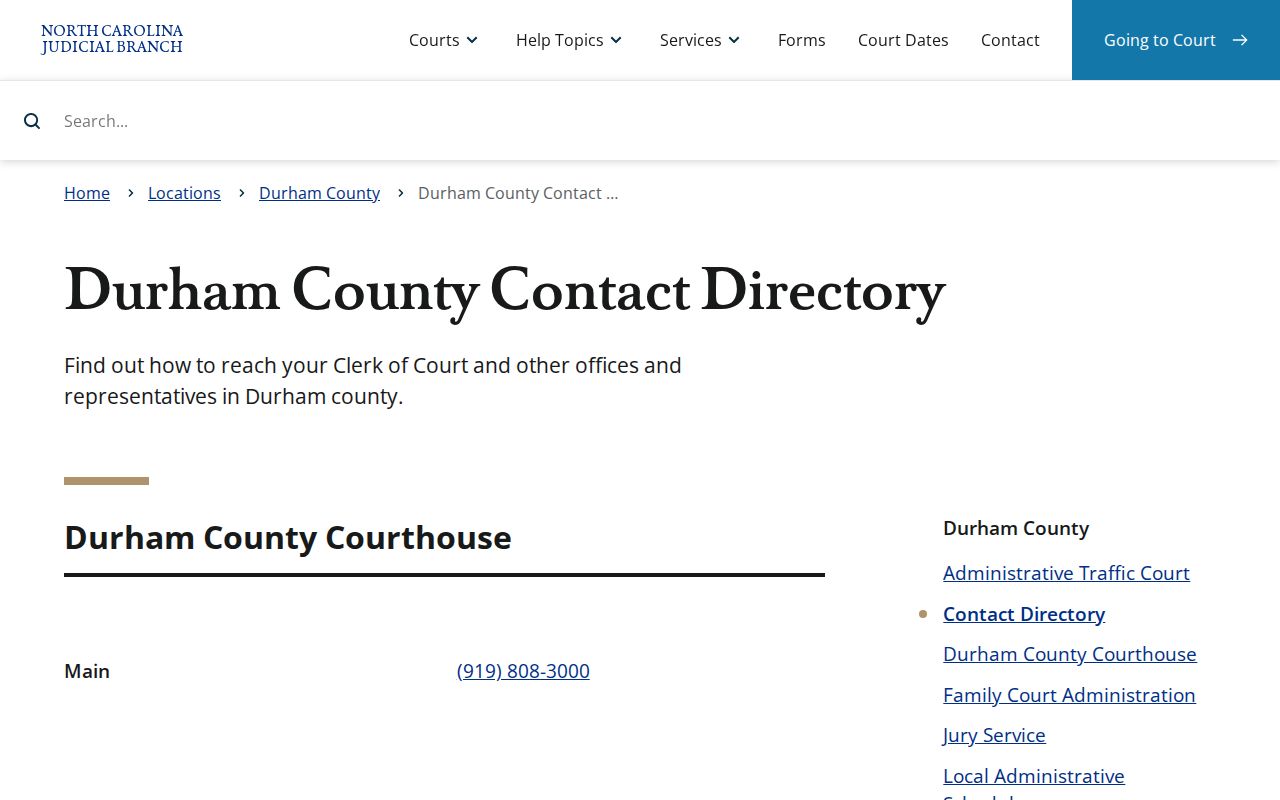
That office split explains why detention staff can confirm custody while the clerk confirms the case result.
What a Durham County Criminal Record Shows
The visible fields depend on the Durham County record. A Durham court docket centers on a case. A Durham jail entry centers on custody and each listed charge. An SBI file centers on an identity and fingerprint-supported Durham arrest cycle. Differences can be valid: a Durham officer's arrest wording may change when the prosecutor files charges, bond conditions can change after a hearing, and a dismissal may not erase every separate agency record without an eligible expunction process.
| Name and identifiers | Legal and alias names, public descriptors, and fingerprint-based state identifiers where the product permits them |
|---|---|
| Arrest and booking | Arrest date, agency, confinement and release dates, booking charge, bond, and docket reference |
| Charges and statutes | Alleged or filed offense wording, statute citation, sequence, and class when populated |
| Case events | Filing, service, hearings, calendar activity, plea, and other docket entries |
| Disposition | Dismissed, not guilty, guilty, convicted, deferred, or another coded outcome as applicable |
| Sentence or supervision | Judgment, sentence, incarceration, probation, post-release, or parole data where public |
Common gaps include delayed disposition reporting, archived paper files, juvenile confidentiality, expunged matters, and same-name confusion. For an error in your SBI history, obtain the fingerprint-based review, identify the exact cycle, secure a certified Durham disposition, and follow SBI's correction instructions.
Durham Criminal Record Custodians
Several offices sit near the courthouse, but their duties do not merge. Route the request by record ownership. The Clerk of Superior Court maintains Superior and District Court files. The Sheriff controls sheriff reports and detention records. Durham Police manages city incident and arrest reports through the City request process. The SBI holds the central fingerprint-indexed repository. NCDAC controls state prison and adult community-supervision information.
Clerk of Superior Court
510 S. Dillard St.
Durham, NC 27701
919-808-3000
Weekdays, 8:30 a.m. to 5 p.m.
The Durham Public Defender source also shows the courthouse system's separate roles. View the official Durham Public Defender office information for appointed-defense contacts, not neutral court-record custody.
For a record copy or docket question, the clerk remains the proper office even when a lawyer or prosecutor worked on the case.
Public Access Laws
The North Carolina Public Records Law starts with broad access to government records, but criminal material has specific limits. G.S. 132-1.4 keeps criminal-investigation and intelligence files outside the ordinary public-record definition while requiring release of listed arrest, charge, incident, and agency-response facts. This means a focused request for the public categories can work better than a demand for the entire investigative file.
Key North Carolina statutes:
G.S. 132-1 and 132-6 define public records and reasonable inspection rights.
G.S. 132-1.4 separates protected investigations from arrest and incident facts that must be public.
G.S. 15A-534 governs lawful pretrial release and bond conditions.
Article 5 of Chapter 15A controls North Carolina expunction relief and agency notice.
Body-worn camera recordings follow a special court process under G.S. 132-1.4A. Juvenile records are generally confidential under Chapter 7B. The City of Durham says most requests are free, but copies, media, or unusually extensive retrieval may produce actual-cost charges disclosed in advance.
Durham Criminal Records Under State Law
The City of Durham public-records portal and the Sheriff's channels work differently. The City directs DPD requesters online, asks them to search prior releases, and does not accept requests by phone. Its form seeks contact details, a full record description, a date range, a known title or report number, and a delivery choice. Staff aim to respond within 14 days, though a large or legally reviewed request can take longer. That is a City service goal, not a statewide deadline for production.
For sheriff-created records, use the Durham County Sheriff's official site or call 919-560-0900. Current custody questions go to the inmate line. For DPD records, ask for the public incident or arrest categories supported by G.S. 132-1.4(c). Be precise about date, location, involved person, and report number. Do not assume that witness statements, lab work, surveillance, or the full narrative must be released.
Sealed, Expunged & Restricted
North Carolina's statutory term is expunction. Durham County filings go to the clerk in the county where the charge or conviction occurred. G.S. 15A-146 addresses dismissed and not-guilty outcomes, including certain automatic processes. G.S. 15A-145.5 covers qualifying nonviolent convictions while excluding listed serious, registration-related, impaired-driving, and other offenses. Other Article 5 sections apply to specific ages, offenses, or circumstances, so the petition and filing rule must match the exact legal category.
Juvenile files, protected investigation material, and sealed or expunged cases do not appear like ordinary public records. After an expunction order, the clerk sends notices to listed agencies under G.S. 15A-150. If a Durham County matter still appears, obtain a certified order, identify the repository displaying it, and use that agency's correction process. Automatic relief should also be verified rather than assumed from a missing Portal result.
Filing fees vary by statute. Several conviction provisions currently include a $175 combined fee, while other categories are free and a specific under-18 provision reflects a different amount. Confirm the current Article 5 text and clerk fee for the exact petition before filing.
Durham County Warrant Record Route
No dependable unrestricted Durham County active-warrant name database was found in the official sources. The practical route is to call criminal magistrates at 919-560-6826 for court-process guidance, contact the Sheriff at 919-560-0900, and search eCourts for the underlying case. A missed court date should be addressed with the clerk and legal counsel. Active investigative or sealed warrants may not appear in public results.
An absence online does not prove clearance. A bench order for arrest may follow a failure to appear or another form of noncompliance, while a search warrant may remain protected during an investigation. Do not report to a jail counter based only on a web search. Obtain current instructions and legal advice first, since resolution may require a court appearance, recall or strike action, and new release conditions.
Criminal Records by City in Durham County
Durham County's city profiles reflect jurisdiction, not a claim that each municipality's full population lives inside the county. Durham is the county's central city. Chapel Hill lies mainly in Orange County and has a Durham edge. Raleigh is centered in Wake County but can matter to eastern Durham readers. For each place, identify the agency, incident location, booking county, and filing court before choosing the records channel.
Durham Criminal History
DPD records use the City portal; county bookings and state court files remain with separate offices.
Chapel Hill Criminal History
Check the incident and filing county because most town cases route through Orange County.
City police do not run separate municipal criminal courts in these places. North Carolina's state-run District and Superior Courts handle the filed cases. Most Chapel Hill matters route to Orange County, and most Raleigh matters route to Wake County, but an event tied to Durham County must be checked under Durham's filing location. Campus incidents add another layer because Duke, North Carolina Central University, and UNC police keep their own agency reports.
Durham Criminal Record Expunction Pipeline
An expunction order must reach more than one office because the event may exist in several Durham County and state systems. The clerk begins agency notice. The Administrative Office of the Courts, SBI, law enforcement, NCDAC, DMV, and other named custodians then process the order as the statute directs. A court result disappearing from Portal does not by itself show that every repository finished its work.
Record flow: Durham County clerk › state court administration › SBI and named agencies › repository-specific removal or restriction.
If the record remains visible, compare the case number and repository rather than sending the same request everywhere. A court-display issue goes to the clerk. An SBI cycle error needs the SBI challenge route and certified case proof. A public arrest-fact issue goes to the agency that created the record, subject to the limits of the expunction order and North Carolina law.
The Census source documents the local growth context that can raise records demand. Review Durham city QuickFacts for the official 2024 estimate.
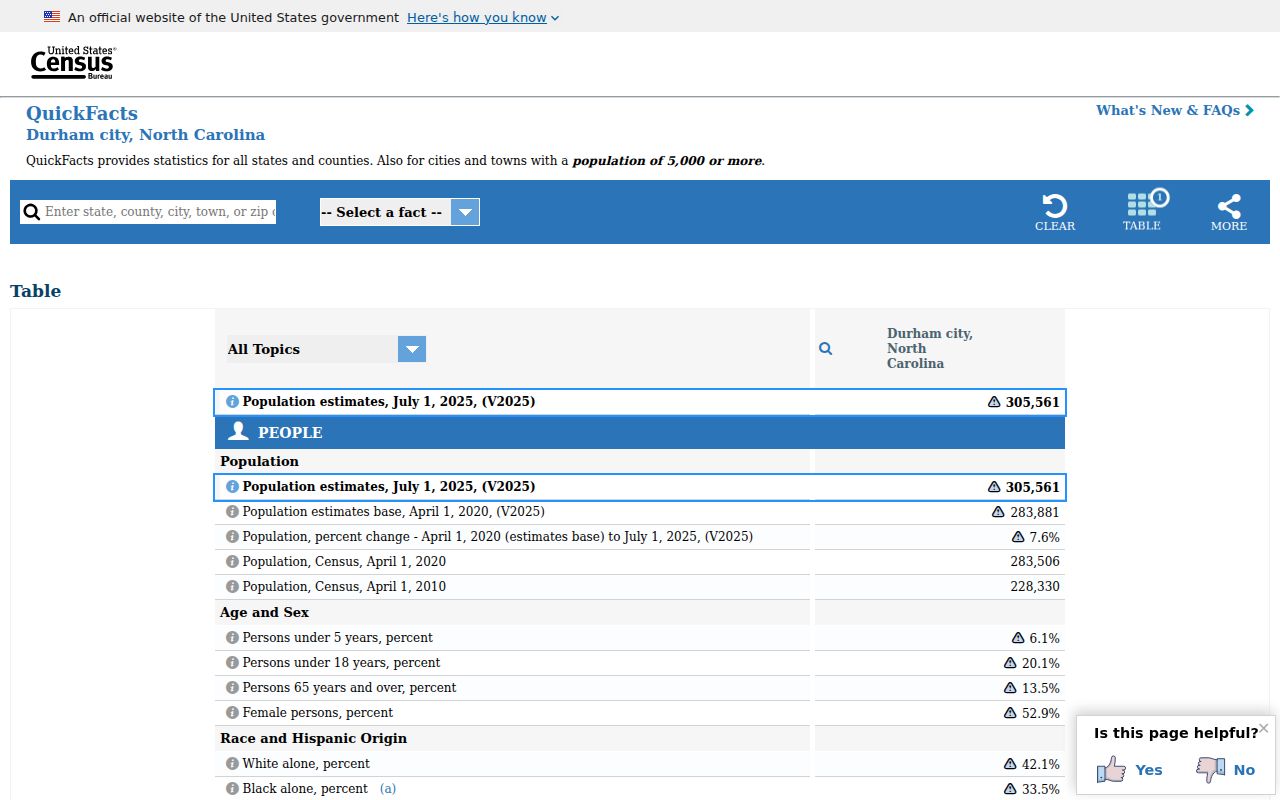
Durham city's estimate of 301,870, up from 283,506 in 2020, adds practical context to court, jail, police, and public-record workloads without changing which office owns each file.