
Criminal Cases in the Durham County Courts
Durham County is Judicial and Prosecutorial District 16. North Carolina Superior Court hears felony trials and felony pleas. District Court hears misdemeanors, infractions, juvenile matters, and the first stages of felony cases. Both courts use the same state-operated clerk at the Durham County Courthouse. Magistrates issue criminal process, conduct initial appearances, and set release terms. The District Attorney decides which charges to pursue, yet the DA is not the neutral custodian of the court record.
The Clerk of Superior Court keeps District and Superior Court case files. That makes the clerk the right source for docket entries, filed charges, hearing records, outcomes, judgments, and certified copies. A police agency owns its report, and the detention facility owns its custody data. Those records can point toward a case, but neither replaces the Durham County court file. The local Durham County court contact directory separates clerk, judge, magistrate, and prosecutor phone lines by function.
Durham County Court Levels
A Durham County case may touch both trial court levels without becoming two unrelated matters. Durham District Court handles a misdemeanor through plea, trial, and judgment. For a Durham felony, District Court handles early process and a probable-cause stage when needed, while indictment or another lawful charging path moves the case toward Superior Court. The Durham case number and event history help track that path.
- Initial appearance
- A magistrate reviews custody and release conditions soon after arrest.
- Arraignment
- The charge is formally addressed and a plea may be entered.
- Disposition
- The recorded result of a charge, such as dismissed, not guilty, or convicted.
- Judgment
- The court's formal decision, including sentence terms when guilt is found.
The North Carolina Judicial Branch criminal cases overview describes these court roles and the main steps. It helps decode why one Durham County docket may show events in more than one court setting.
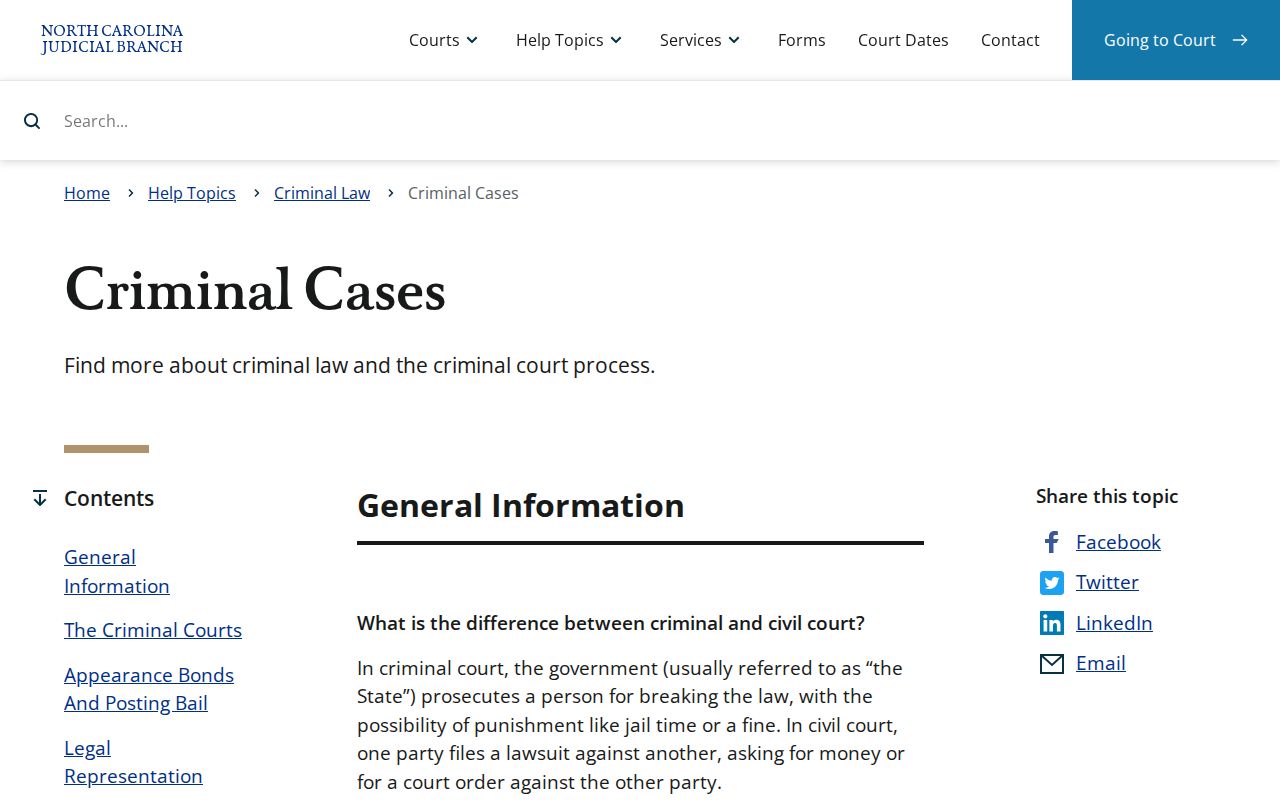
The official overview gives context for event labels that appear in a Durham County case record.
How to Search Case Records
Start a Durham County search with the North Carolina eCourts Portal. It supplies public case information for all counties after the statewide Odyssey conversion finished in 2025. Portal is useful for Durham case discovery. It is not a certified Durham County court record, and the Judicial Branch warns against treating it as a formal criminal-background-check product.
- Open Smart Search and use the full party name or an exact case number.
- Set the location to Durham County and choose a criminal or infraction category when that filter appears.
- Compare the filing location, full name, case type, and date details across matches.
- Open the docket and note the charge sequence, hearing entries, status, and outcome.
- Ask the clerk for the file, an official copy, or a certified search when the record must be authoritative.
| Field Label | Type | Required | Notes |
|---|---|---|---|
| Smart Search | Text | One identifier | Party name or case number |
| Advanced Filtering Options | Expandable filters | No | Narrows broad matches |
| Location | Dropdown | No | Select Durham County |
| Case type or category | Dropdown | No | Choose criminal or infraction when shown |
| Party or record type | Dropdown | No | Person or case search |
| Register or sign in | Account control | No | Basic public search does not require it |
Durham eCourts After Conversion
The statewide move to eCourts changed what a remote Durham County case search can find. Advice that North Carolina offers no online case information is now stale. Still, the portal view and the official file are different tiers. Search results may omit confidential matters, sealed or expunged cases, older material, and paper documents that have not been scanned. Downloadable images also vary by record.
The Judicial Branch eCourts overview explains the statewide system and service links. Its interface shows how Durham County now fits into the same platform as every other North Carolina county.
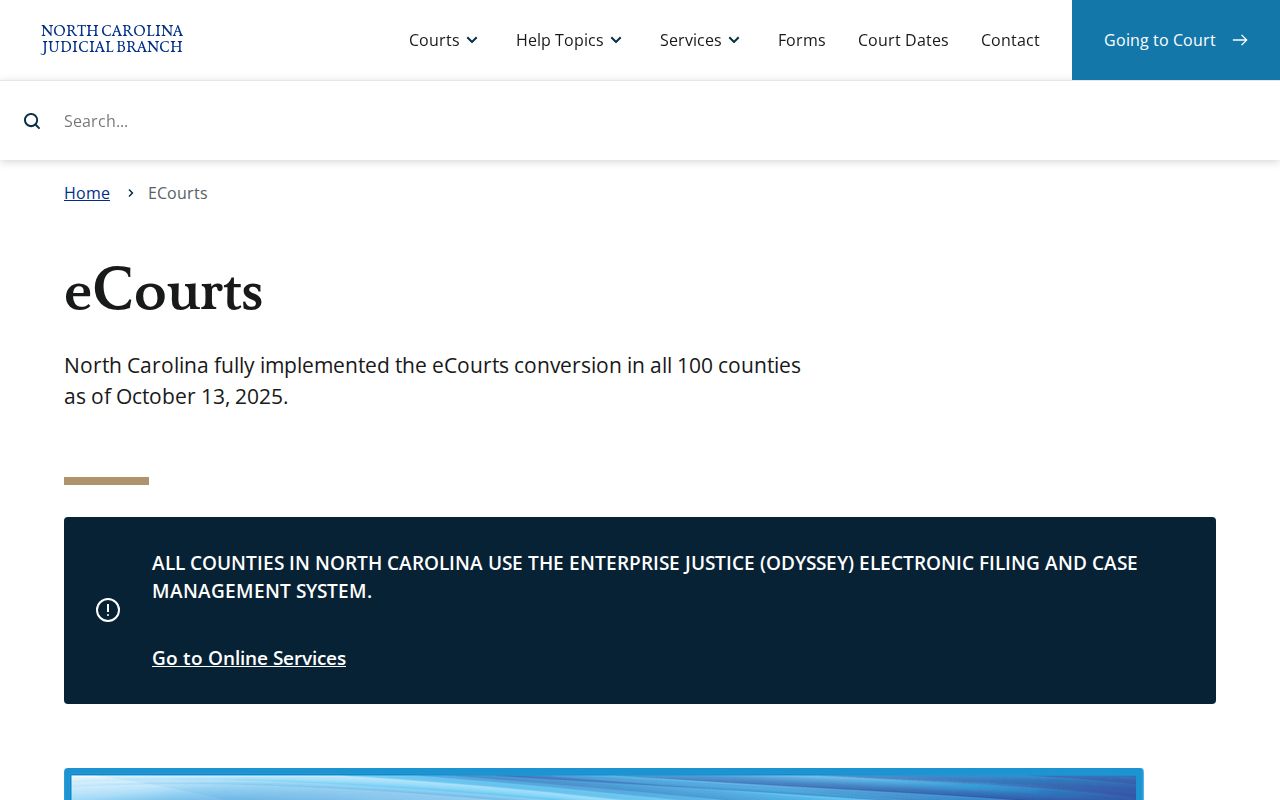
That common platform makes the Durham location filter vital, especially when a person has cases in more than one county.
What the Case File Shows
A Durham County criminal case file documents a Durham prosecution, not just the custody event that may have come first. Read each Durham charge separately because the prosecutor may amend or replace an arrest charge. The status of one count may differ from another. A Durham County dismissal ends that charge without a conviction, while a guilty finding can lead to a judgment and sentence.
| Case Number and Court | Year, criminal designation, sequence, filing location, case type, and court assignment. |
|---|---|
| Charging Document | The filed accusation, charge wording, statute, offense date, and count sequence when public. |
| Docket Entries | Filing, service, process, motion, plea, calendar, disposition, and judgment events. |
| Hearing Dates | Date, time, location, courtroom, and session type when populated. |
| Disposition and Judgment | Dismissed, not guilty, guilty, convicted, deferred, or another coded result as applicable. |
| Sentence and Conditions | Public sentence data, release conditions, costs, fines, and balances when eligible and entered. |
Protected identifiers are redacted from Durham case records. Juvenile, confidential, sealed, and expunged Durham matters may be absent. A Durham docket may identify a filing without offering the document image online.
Durham Court Records at Clerk
The courthouse records counter is the fallback when Portal is too thin. Public self-service terminals search by defendant name, case number, and victim or witness name. After finding the right docket, ask the clerk to retrieve the electronic or paper case file. The clerk can provide copies and performs a certified county criminal-record search for $25. Call before an archival visit because older files may need retrieval. The official Durham County Courthouse page is the source to recheck access, hours, and phone details before going.
Clerk of Superior Court
Durham County Courthouse
510 S. Dillard St.
Durham, NC 27701
919-808-3000
Monday through Friday, 8:30 a.m. to 5 p.m.
The Judicial Branch explains how to obtain Durham court records through Portal, a Durham terminal, a paper file, or the clerk. Its Durham access page reflects the distinction between viewing a docket and obtaining an official copy.
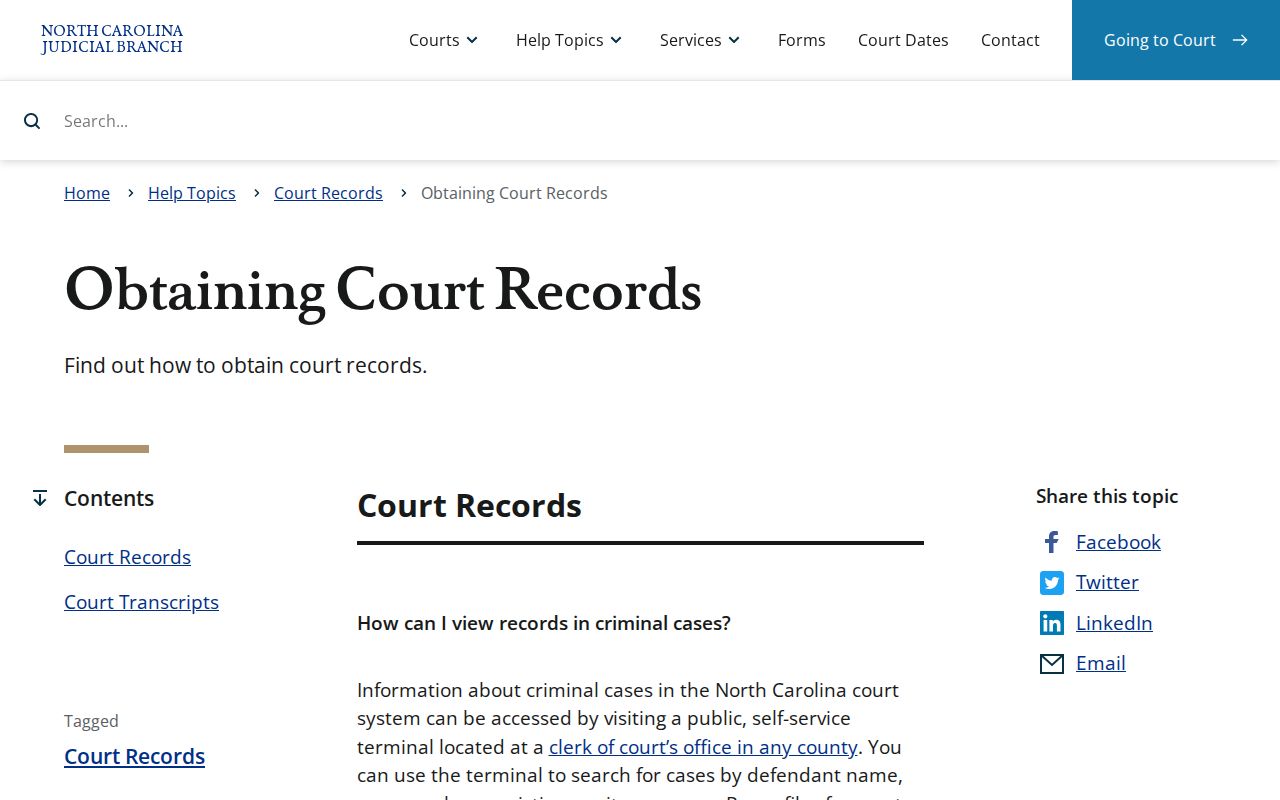
The Durham clerk route is the sound choice when an online result lacks a document, has an unclear code, or must be certified as a Durham County record.
Stages of a Criminal Case
Durham County cases do not all move through every stage. A Durham misdemeanor can stay in District Court. A Durham felony may begin with magistrate process and District Court events before reaching Superior Court. A Durham plea can end the contested phase, while a trial produces a verdict. Appeals create a later Durham record in the proper reviewing court.
Durham case flow: Charges Filed › Arraignment › Pretrial › Plea or Trial › Disposition › Sentencing
The Durham docket records what actually happened. It should control over a guessed Durham timeline or the wording on an old booking row.
When Durham Cases Are Missing
A missing Portal result does not prove that no Durham County case exists. A Durham booking may be too new for the filing to appear. The Durham name may use a different spelling. The filing could belong to Orange or Wake County despite a Chapel Hill or Raleigh address. Older Durham material may be archived, while juvenile, sealed, confidential, or expunged records may be withheld from public search.
Try the full name and then the docket number. Confirm the county on the booking row. Next, use the courthouse terminal or call the clerk. If the arrest is brand new, call detention or the arresting agency first. For a missing disposition in one's own SBI record, obtain a certified Durham County disposition and follow the SBI correction process.
Note: A Durham web search gap can reflect timing, spelling, jurisdiction, archiving, or a lawful Durham access restriction.
Durham Federal Court Cases
Federal Durham charges are outside the state eCourts system. Durham County lies in the U.S. District Court for the Eastern District of North Carolina. PACER is the official federal docket and document access system after account registration, and its current federal fee rules apply. The Durham County clerk cannot certify a federal court file.
The PACER interface provides the separate path needed when a Durham investigation becomes a federal prosecution.
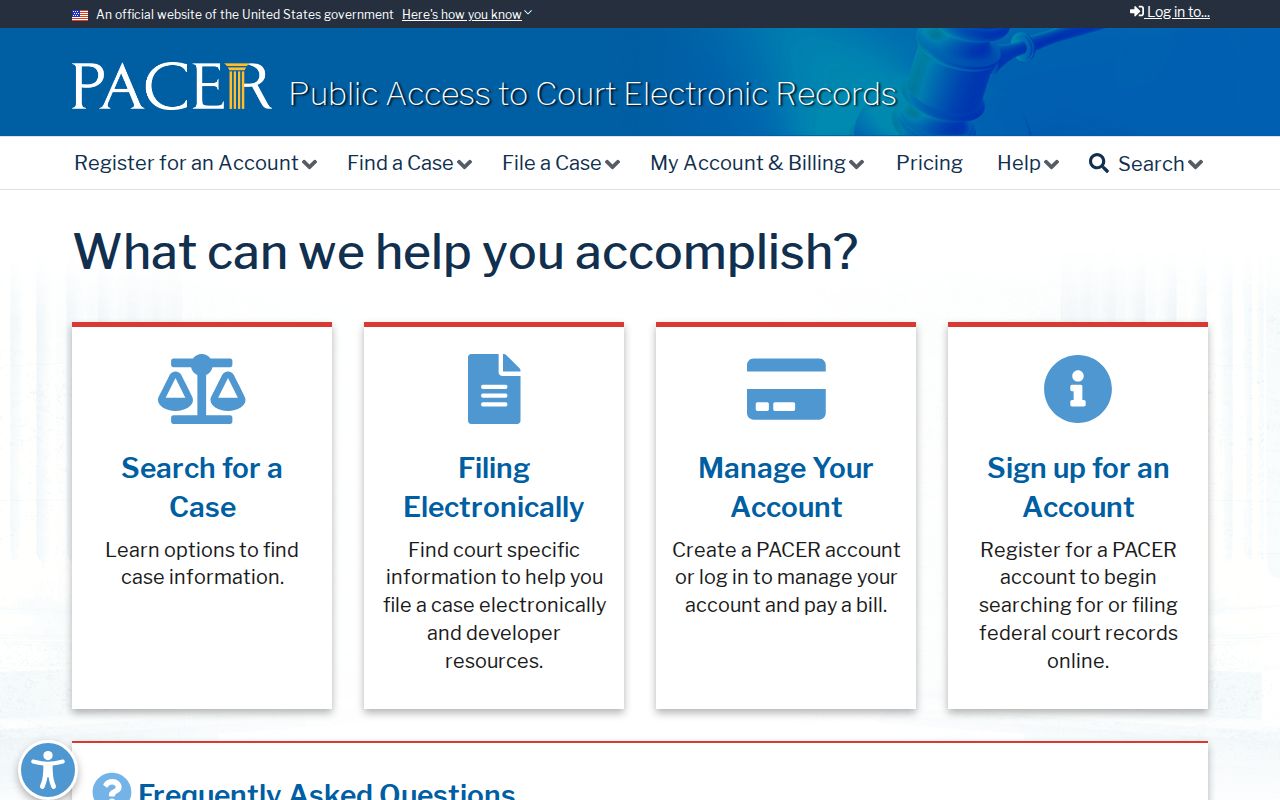
Search the federal court layer only when the Durham charge was filed there; Durham state and federal dockets are not duplicates.
Access & Restrictions
North Carolina Public Records Law supports inspection of many Durham government records at reasonable times, but Durham court and criminal files carry specific limits. Investigation and intelligence records are not ordinary public records under G.S. 132-1.4(a). The statute still requires release of defined Durham arrest and incident facts. Juvenile records are confidential under G.S. 7B-2901, and protected personal data may be redacted.
Sealed and expunged cases are not ordinary public-search material. A dismissal is not itself the same as sealing every linked agency record. North Carolina calls the relief process expunction. The exact Article 5 statute controls eligibility, and the clerk sends required notices after an order. The local District Attorney for Prosecutorial District 16 decides what to prosecute but does not replace the clerk as record custodian. For public case access, use the clerk to distinguish a technical omission from a legal restriction.