
How to Check Criminal History in Chapel Hill
Start with facts about the event, not an assumption about the county. Ask where in Chapel Hill it happened, which agency responded, where the person was booked, and which filing location appears in eCourts. Most town matters follow Orange County channels, but a Durham County incident or filing belongs with Durham offices. A campus event can begin with UNC Police instead of the town department.
- Confirm the incident location and whether Chapel Hill Police, UNC Police, or another agency responded.
- Request the public police facts from the agency that created the report.
- Check the jail in the county that received the person when custody or booking is at issue.
- Search eCourts by party or case number, comparing Orange and Durham as filing locations.
- Ask the clerk in the displayed county for official copies or a certified court search.
Do not stop at the first same-name result. Compare the docket number, filing county, available date details, and charge path before treating it as the sought Chapel Hill record.
Chapel Hill Records Cross County Lines
Chapel Hill’s whole-town population and postal identity do not define a Durham County subpopulation or court venue. The city profile exists because Durham County readers can encounter Chapel Hill agencies and addresses at the county edge. In practice, most Chapel Hill criminal cases are Orange County matters. A filing tied to an event in Durham County routes to Durham instead.
The common mistake is to type a name, see a Chapel Hill connection, and choose a clerk based on the town label. Venue means the county and court with authority over the case. Check the eCourts location field and the agency line on the police record. If those point to different places, the filed court location controls where the official judicial file is kept.
Town limits, postal addresses, and court venue describe different boundaries. An address may use Chapel Hill while the event falls outside CHPD responsibility. Likewise, a town officer’s report can identify an incident that later enters a county-run court and jail system. Treat each boundary as a fact to verify rather than a shortcut.
The Chapel Hill Police Department
The Chapel Hill Police Department is the first custodian for reports created by town officers. A useful request describes the incident, a date range, location, involved parties, report number when known, and the record sought. CHPD can address its own public police material, but it does not control a District Court judgment or the booking record of a county jail.
UNC Police is a separate state-university agency. When an event occurred on campus, determine which officers took the report before using the town request system. The word “Chapel Hill” in an address does not merge the two agencies’ files. Each custodian searches its own records and applies the law to the material it holds.
Chapel Hill Police Record Requests
The Town of Chapel Hill public-records page is the formal town request route. A narrow request helps staff identify the correct police material without asking for an entire investigative file. Supply enough contact detail for clarification and delivery, select the police department where the interface permits, and use a short date range.
| Request field | Useful Chapel Hill detail |
|---|---|
| Requester contact | Email or phone for clarification and delivery |
| Department | Police when CHPD created the record |
| Description | Report number, event, location, and involved person |
| Date range | The narrowest reliable span |
| Delivery | The available electronic, inspection, or copy choice |
Request public arrest and incident categories when that is the need. North Carolina law protects detailed investigation material, so asking for every note, statement, and evidence item can reach information the town is not required to disclose.
If the request is broad, divide it by incident and record type. One request for a public arrest fact and another for a specific report are easier to route than an open-ended demand for a person’s “complete Chapel Hill file.” The town can only search records in its custody, so a court disposition still requires the correct clerk.
Arrests and Bookings in Chapel Hill
Chapel Hill does not supply one universal booking route for every event associated with the town. Custody depends on the arrest location, responsible agency, and judicial venue. Most Chapel Hill matters will point toward Orange County, while an event received in Durham County can lead to Durham detention. The official record must show which county accepted the person.
Check the responsible county jail rather than assuming the Durham inmate roster covers the whole town. A current list answers custody questions but does not replace the court docket. After finding a Chapel Hill booking, note its case number and county, then search eCourts for later charge and disposition events. Release from jail does not end the court case, and an arrest does not prove guilt.
Trace Chapel Hill Booking Records
A reliable Chapel Hill custody search follows a short chain: responding agency, receiving jail, court location, then clerk. If no current booking appears, confirm whether the person was released, transferred, booked in the other county, or listed under a different spelling. Ask the arresting agency for the public statutory arrest facts when the roster no longer shows a historical event.
VINE can provide custody-status notifications when the responsible jail participates, while the North Carolina Department of Adult Correction serves a different population. The NCDAC Community Supervision source depicts the state layer for probation, parole, and post-release work.
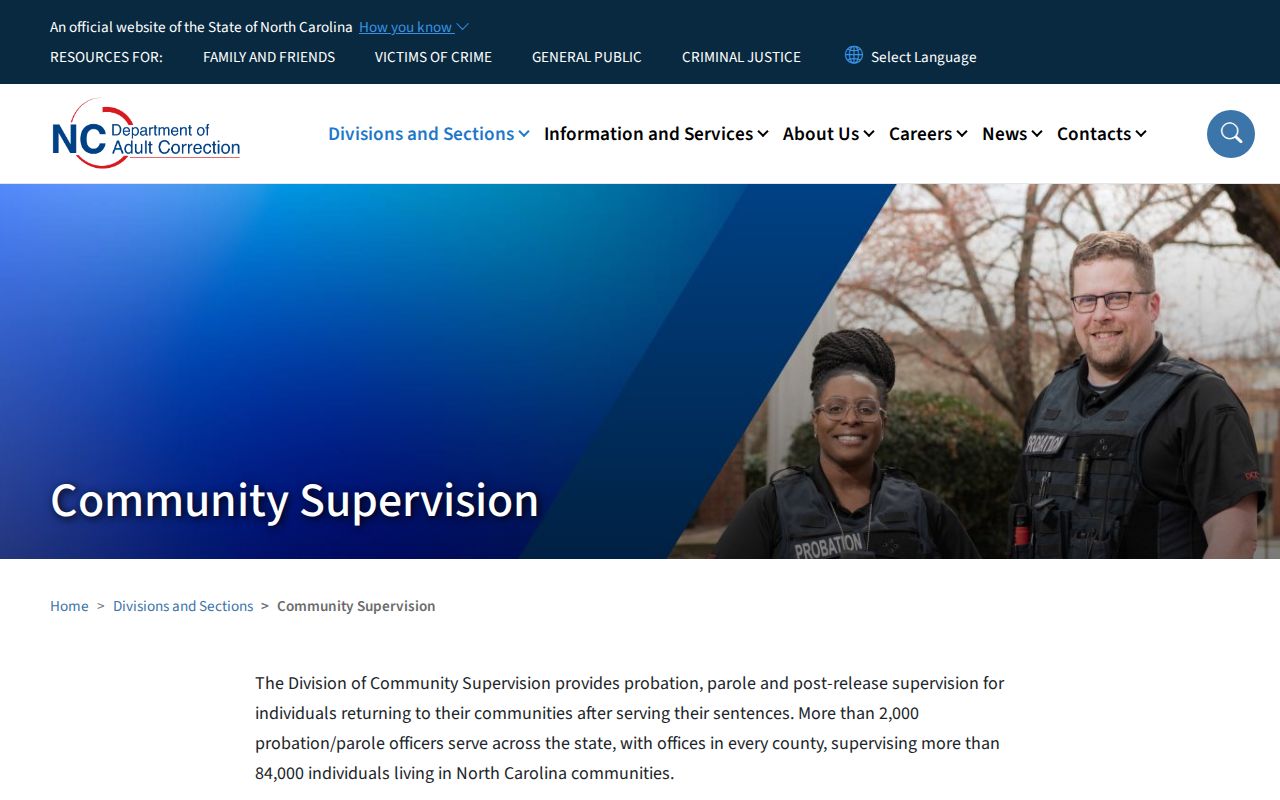
That state source becomes relevant only after a Chapel Hill case reaches a supervision or correction stage; it is not a town arrest log.
Chapel Hill Municipal Court Records
There is no separate Chapel Hill municipal criminal court. North Carolina’s state-run District Court hears misdemeanors and infractions, and Superior Court hears felony trials and pleas. Most Chapel Hill filings belong in Orange County, while a Durham County event filed there belongs with the Durham clerk. City ordinance charges still proceed through this state court structure.
| Court Name | North Carolina District Court or Superior Court in the filing county |
|---|---|
| Case Types Heard | Infractions, misdemeanors, preliminary felony matters, felony pleas, and felony trials |
| Case Lookup Channel | North Carolina eCourts, then the Orange or Durham clerk shown by the filing location |
| What the Docket Shows | Case number, charges, events, hearing dates, disposition, and public sentence details |
| Copies & Fees | Official copies and current fees come from the clerk that holds the case |
Calling this a “municipal court” is convenient search language, but it can send the request to an office that does not exist. The county location in the state case file is the controlling clue.
District Court and Superior Court are levels within one state-operated trial system. A felony may begin with early District Court proceedings before a later Superior Court plea or trial. That path does not create a separate Chapel Hill court. It changes which part of the county case file reflects the next event.
Chapel Hill Court Records by County
The Orange County courts page is the expected route for most Chapel Hill court matters.
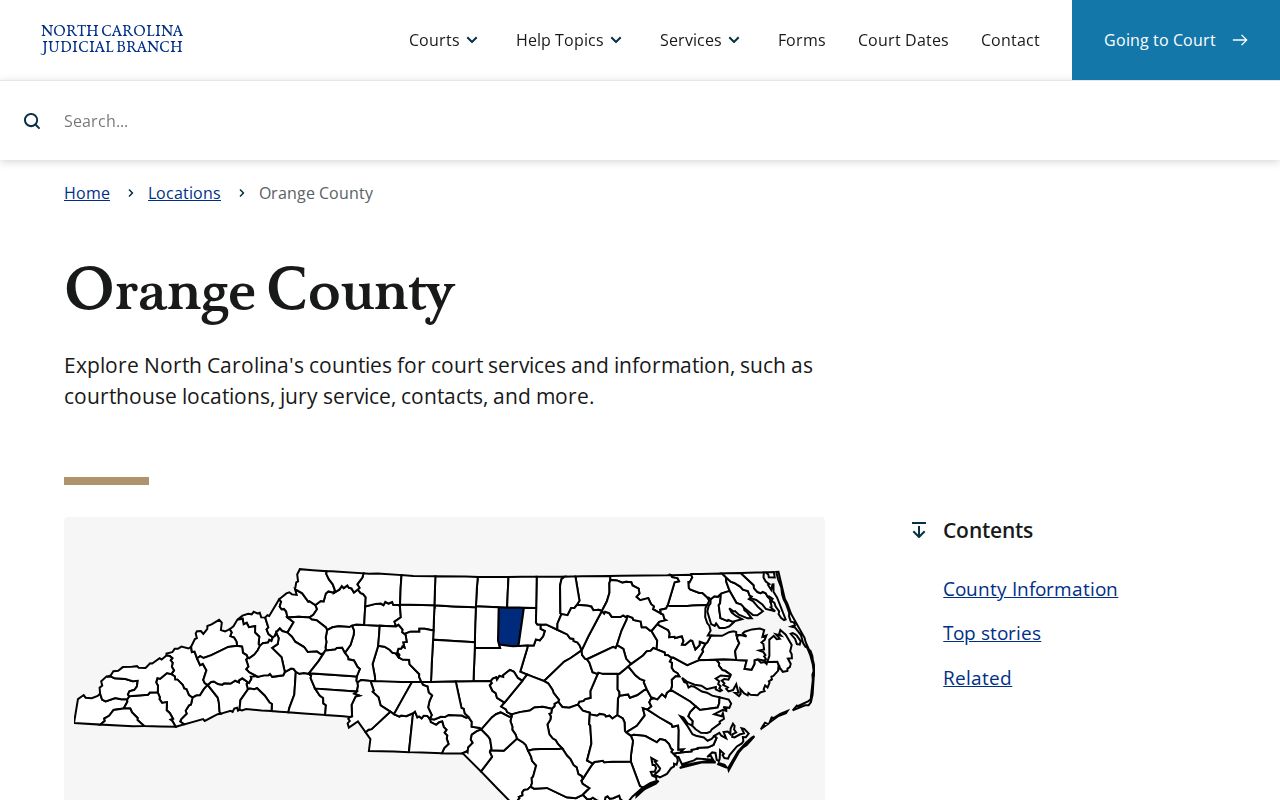
The official location source helps a reader verify the clerk and courthouse connected to an Orange County filing instead of defaulting to Durham.
Search eCourts across both Orange and Durham when the county is not clear. Use Smart Search with a party name or case number, open the location filter, and inspect each matching case. Portal is meant for discovery. A formal or certified Chapel Hill court record must come from the clerk in the county displayed on the docket.
Where Chapel Hill Records End Up
Chapel Hill Police creates the town report. The receiving county creates the booking entry if detention follows. The proper District or Superior Court clerk maintains the judicial file. Final court outcomes then move through statewide reporting toward the North Carolina SBI criminal-history repository, where fingerprint-supported arrest cycles may be matched with dispositions.
Record flow: Chapel Hill Police Department › Orange or Durham County Courts › North Carolina State Bureau of Investigation
The county choice in that flow is not optional. A Chapel Hill mailing address cannot move an Orange filing into Durham or vice versa. Recent police facts may exist before a docket appears, and a court outcome may take time to match to a state record. Search according to the stage of the event.
Chapel Hill eCourts Search Errors
If an eCourts search returns nothing, clear an overly narrow county filter and compare Orange with Durham. Try the case number when available, or refine a name using all known parts without assuming two people are the same. A new charge may not have reached Portal, and an older, sealed, expunged, confidential, or unscanned file may not appear in the public view.
Next, contact the clerk in the most likely filing county and provide the incident location, agency, date, and any docket reference. For a recent arrest, call the responsible jail or agency. For your own identity-based statewide history, use fingerprints through the SBI Right to Review. Each fallback answers a different gap; none makes a blank screen proof that no Chapel Hill record exists.
Portal results may also separate charges into more than one case. Keep each docket number with its own county and disposition. Combining nearby results because they share a person’s name can hide a dismissal in one case or attach the wrong outcome to another. The clerk can confirm what belongs in each official file.
Chapel Hill Public Arrest Facts
G.S. 132-1.4 draws a line between public arrest or incident categories and protected criminal-investigation records. The public side can include the time, date, place, apparent violation, identifying facts about a person arrested or charged, arrest circumstances, weapons information, and specified agency-response details. Witness statements, investigative theories, evidence files, and other sensitive material can remain protected.
The official North Carolina criminal procedure statutes provide the broader rules for how charges and court process move.
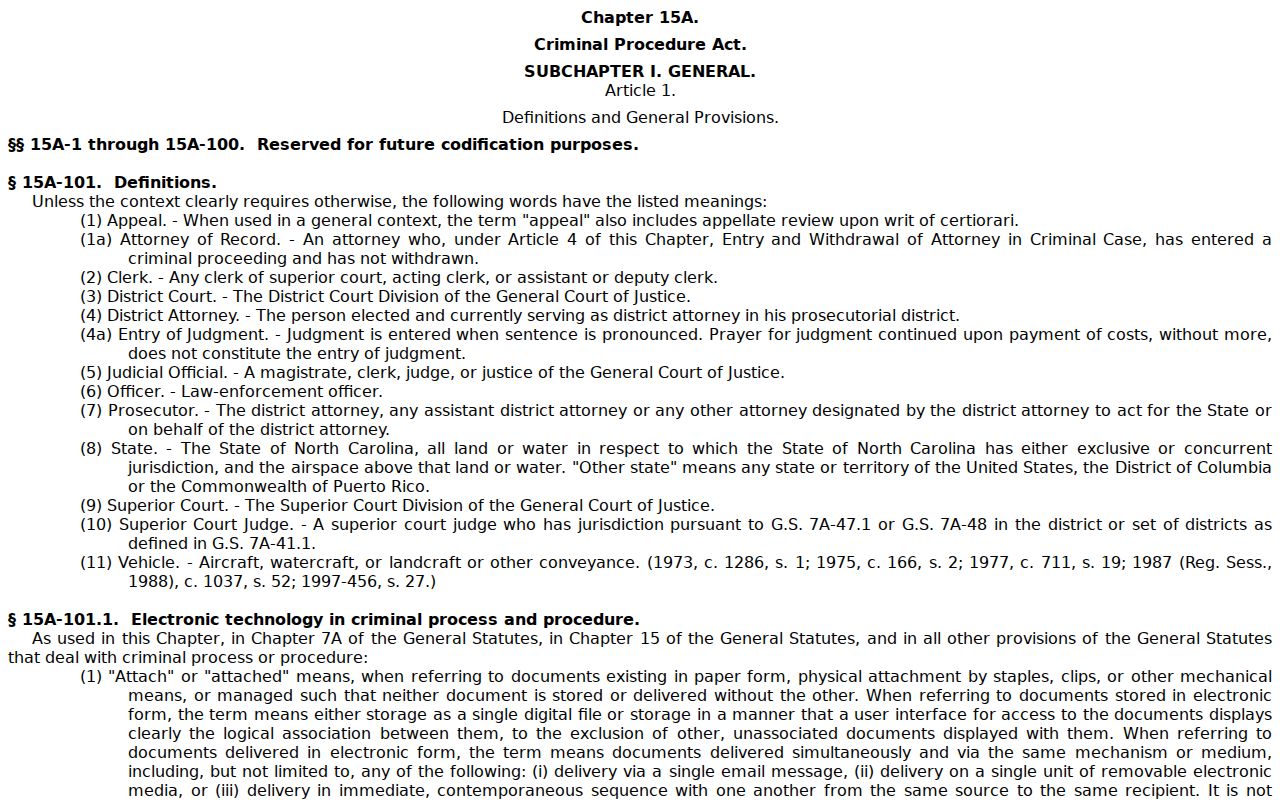
The statute source helps separate a request for a Chapel Hill police fact from a demand for the court’s case record or a protected investigative file.
Public Access Rules
Chapel Hill records remain subject to North Carolina access limits even when the county line is uncertain. Chapter 132 broadly defines public records and permits reasonable inspection and copies. Actual-cost charges may apply, and extensive technical work can support a special service charge. Criminal investigations, juvenile cases, sealed matters, expunged records, and custodial recordings receive separate treatment.
North Carolina calls record clearing “expunction.” The correct filing county is the county where the charge or conviction occurred, not simply Chapel Hill as a place name. The official Article 5 expunction provisions illustrate the state rules.
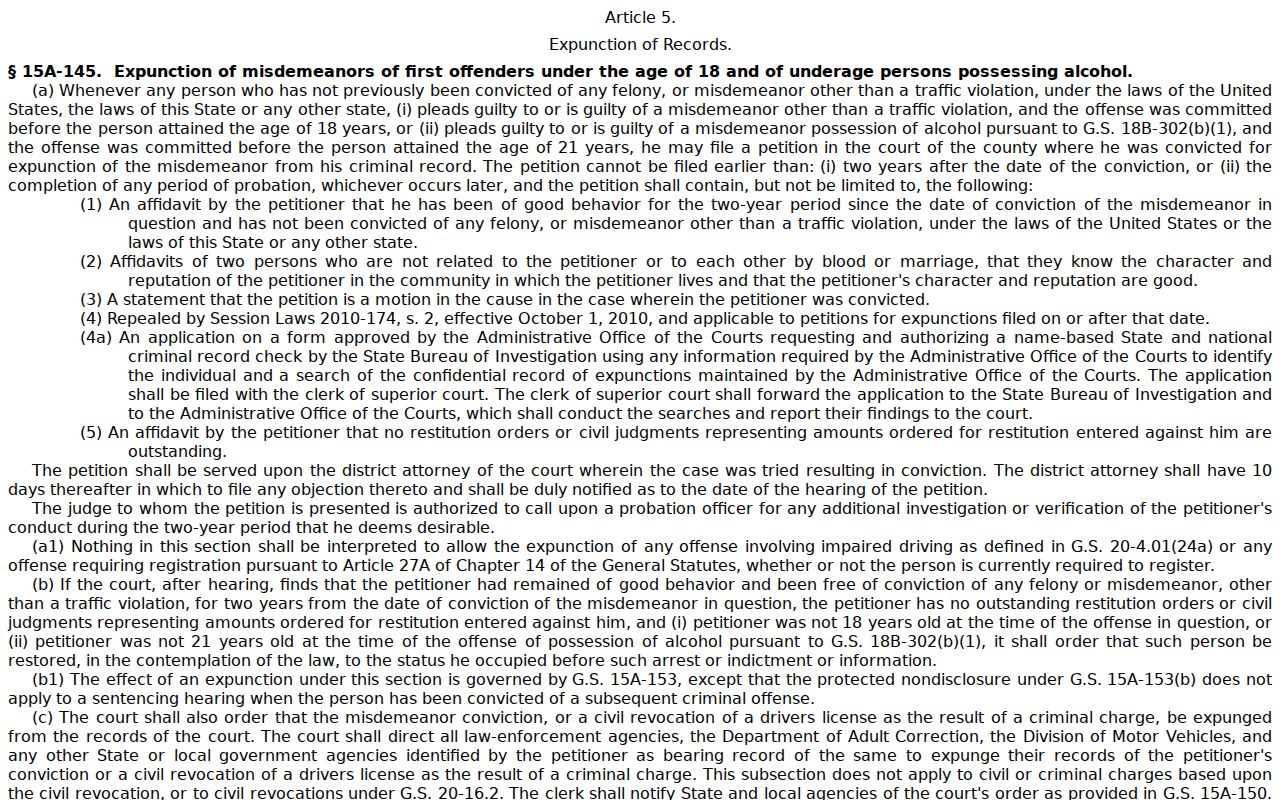
The image links the city search back to the proper county filing and the statute governing relief.
Key Statutes:
G.S. 132-1 and 132-6 define public records and allow reasonable inspection and copies.
G.S. 132-1.4 protects investigative files while requiring specified arrest and incident facts.
Article 5 of Chapter 15A governs expunction petitions and related agency action.
Verify every Chapel Hill result with its originating agency or clerk. A public allegation and a court conviction are different records.