
Running a Sex Offender Check in Durham County
The North Carolina Sex Offender and Public Protection Registry is the first public channel for a Durham County sex offender check. The North Carolina State Bureau of Investigation publishes the statewide interface, while the Durham County sheriff registers local residents and supplies Durham County updates. The Durham County Sheriff's Office does not publish a separate local registry database in the reviewed official sources. A Durham County searcher therefore starts with the SBI site and contacts the Durham County sheriff when local data looks wrong or a registration duty may not have been met.
Prepare more than a name. A Durham County search can use an address and radius, first and last name, city, ZIP code, county, latitude and longitude, or a Sex Registration Number. Durham County search results cover only people whom North Carolina law requires to register publicly. A missing Durham County result does not prove that no relevant conviction exists, and a listed Durham County result does not establish a person's identity by appearance alone.
The official SBI registry landing page shows Durham County users the statewide search choices and cautions that public information can change.
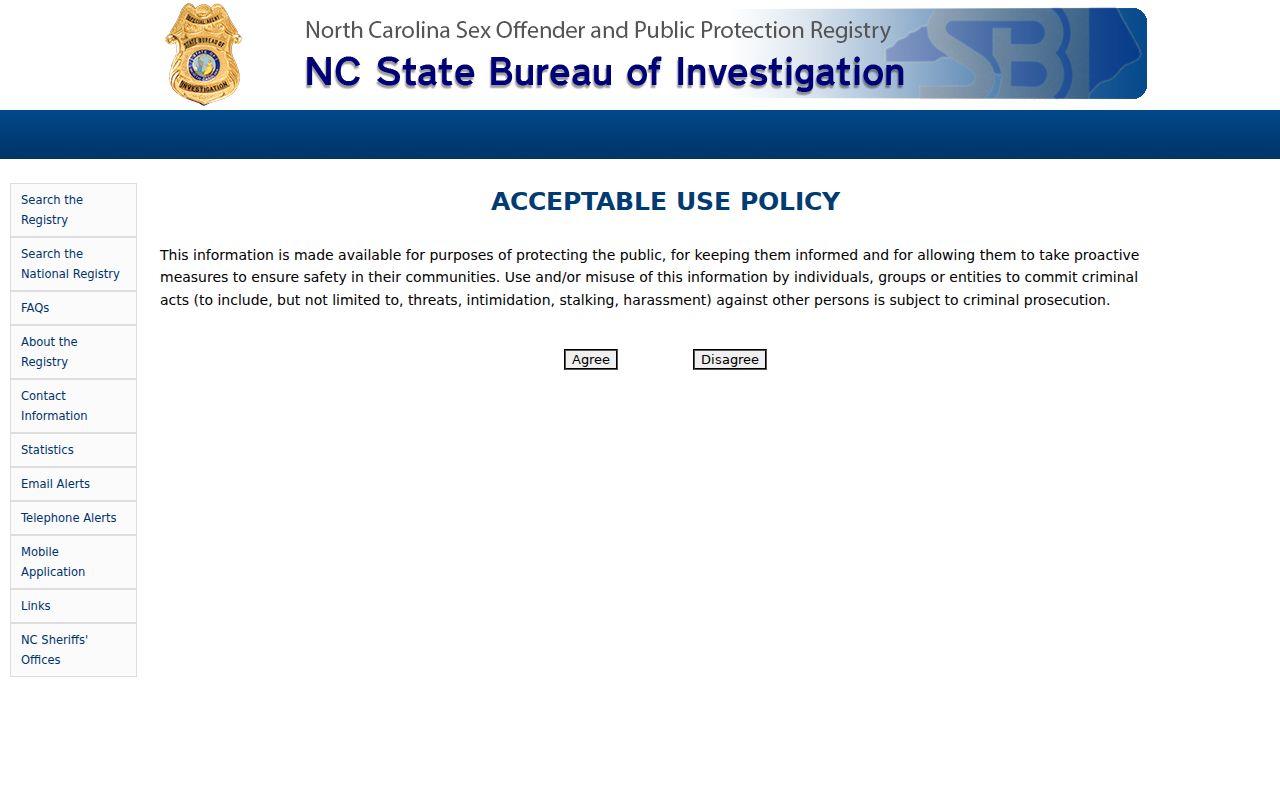
That starting screen matters because Durham County residents can choose the search mode that fits the fact they already know.
Fingerprints Confirm Durham Registry Identity
A name, photo, or shared address can narrow a Durham County registry search, but none is a positive identity test. For Durham County results, the SBI registry FAQ says fingerprints are the only way to establish positive identity. This distinction protects both the Durham County searcher and anyone whose name resembles a listed registrant. Compare the full available name, aliases, birth date, physical description, registered address, registration number, and offense details before treating a Durham County result as relevant.
The official registry FAQ explains offender-reported information, public coverage limits for Durham County, and visual matching.
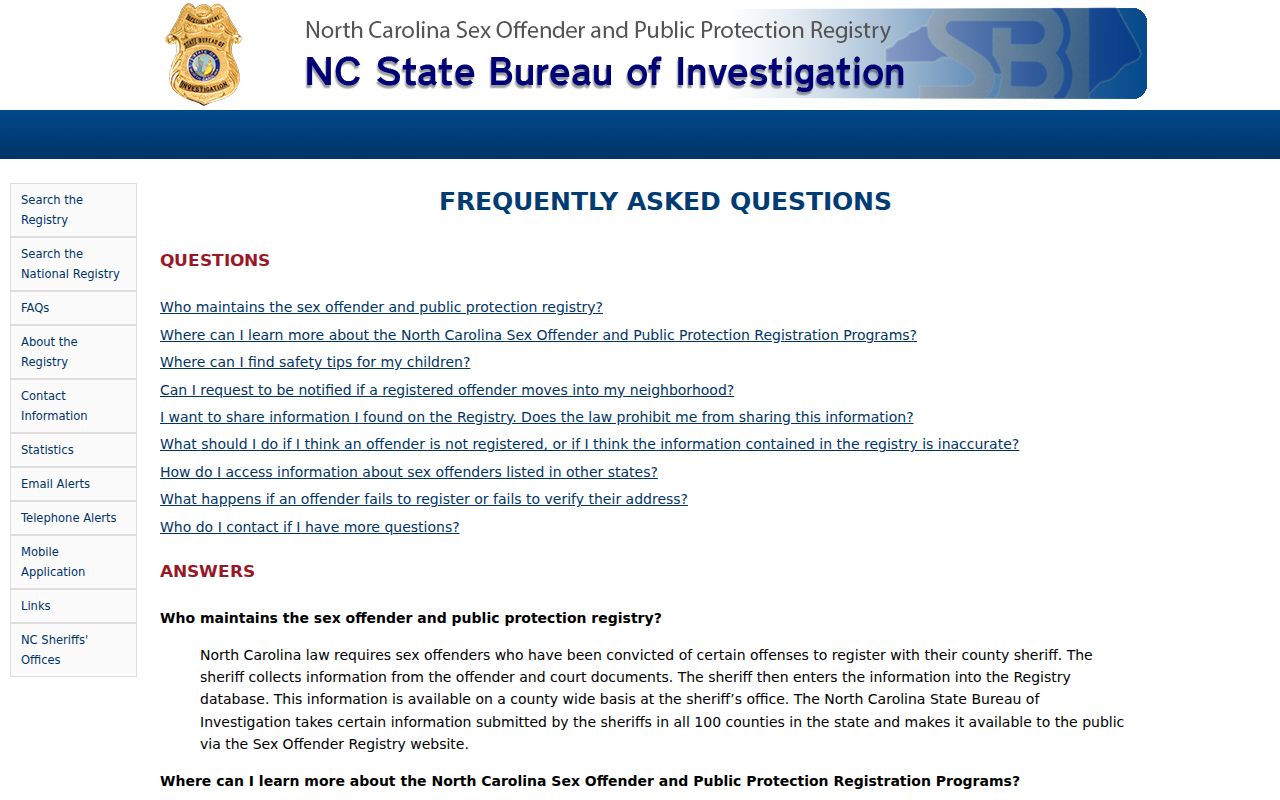
Its warnings make each Durham County result a lead for careful review, not a stand-alone finding about identity or current risk.
Note: A photo resemblance in a Durham County result is not positive identification, and only fingerprints can resolve identity with certainty.
Searching the North Carolina Sex Offender and Public Protection Registry
The SBI search interface supports several ways to find Durham County registry information. A Durham County searcher should pick one mode that matches the data in hand, keep the first query broad enough to catch spelling variations, and then narrow the results. The Durham County filter is useful when Durham is known to be the place of registration. Address and coordinate modes answer a different Durham County question by locating records around a point.
- Open the official Durham County registry search and read its conditions and accuracy warnings before entering a query.
- Choose a name, address-radius, geographic-coordinate, or exact Sex Registration Number search. Set Durham as the county when that filter fits.
- Review the Durham County result list and compare several identifiers. Do not rely on a name or photograph by itself.
- Open the full profile, read the registration status and offense fields, then contact the Durham County Sheriff if local information appears wrong.
The North Carolina registry search form displays the live set of fields and controls for a Durham County check.
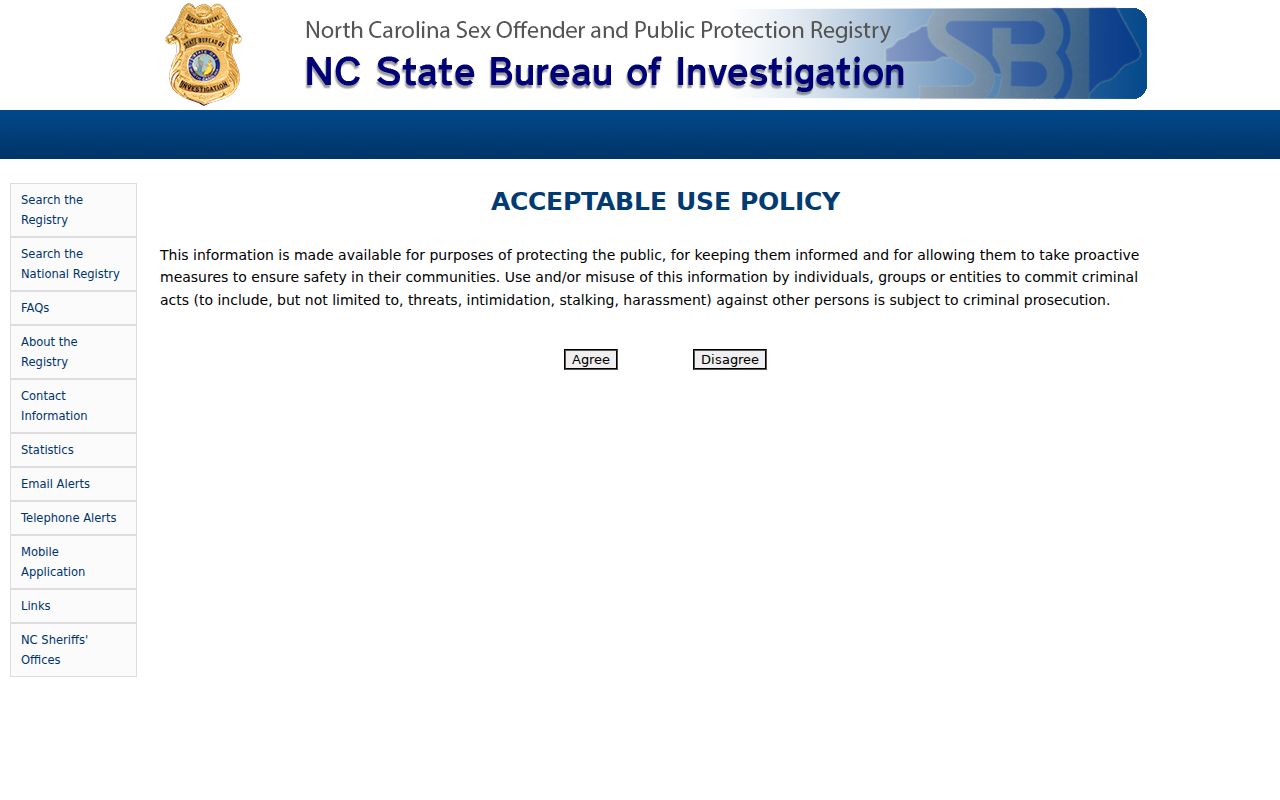
The captured interface shows why Durham County users should choose a mode before assuming that one empty name query settles the issue.
| Field Label | Type | Required | Notes |
|---|---|---|---|
| Offenders near an address | Search mode | One mode | Runs a Durham County address-based proximity search |
| Address and radius | Text and dropdown | For radius mode | Use the options shown for the Durham County query |
| First and last name | Text | Last name is principal | Names do not establish Durham County identity |
| City, ZIP, and county | Text or dropdown | No | Select Durham County when appropriate |
| Latitude and longitude | Numeric | For coordinate mode | Supports a Durham County geographic search point |
| Sex Registration Number | Text | For SRN mode | Use the exact identifier |
| Email alerts | Signup link | No | Tracks Durham County changes around an address area |
Durham Registry Email Alerts
The state registry provides Durham County users with an email-alert signup tied to an address area. This is a notification channel, not a complete safety forecast. A Durham County alert can reflect a registry change within the chosen area, but it cannot show every offense, predict conduct, or certify that no registrant lives outside the search radius. The result also depends on the Durham County address and radius that the user entered.
For Durham County community awareness, use alerts alongside direct Durham County registry searches. Recheck the Durham County public profile when a notice arrives because an address-area message is not the whole record. If the alert or profile appears to contain bad local data, the SBI FAQ directs the user to the Durham County sheriff with detailed information. Durham County Sheriff's Office can be reached at 919-560-0900.
What a Registry Profile Shows
North Carolina law and SBI materials support a broad public profile, but not every item collected by the sheriff necessarily appears online. Durham County registry profiles may display identity details, a current photograph, residence, registration status, and information about the qualifying offense. Some profiles may also show scars, marks, tattoos, vehicle details, or educational-institution status when those fields are collected and publishable.
| Name and aliases | Current and other reported names, including names used at the offense, conviction, or sentencing when collected |
|---|---|
| Photo and description | Current photograph plus sex, race, birth date, height, weight, hair color, and eye color |
| Registered address | The residence information supplied through the Durham County registration process |
| Offense information | Offense type and dates for offense and conviction, along with sentence information |
| Registration details | Registration number, Durham County status, and other mandated location or program information |
| Additional public fields | Publishable scars, marks, tattoos, vehicle data, or school enrollment information when present |
| Nonpublic identifiers | Fingerprints and driver-license identifiers collected by the Durham County sheriff are not necessarily public profile fields |
Juveniles adjudicated delinquent of sexually violent offenses are excluded from the public site under the provisions identified in the research. That is one reason a Durham County online inventory cannot be read as a list of every person connected to every sex offense.
Durham Sheriff Registration Data
A Durham County registrant initially reports to the sheriff in the county of residence. The Durham County sheriff collects the information required by Article 27A, as well as a photograph and fingerprints. The law does not permit a charge for those collection items. The Durham County sheriff then serves as the local contact for verification, address changes, suspected nonregistration, and possible errors in locally supplied data.
Durham County public and sheriff-held fields are not the same set. Fingerprints anchor identity for law-enforcement purposes, but they are not a public download from a Durham County profile. Driver-license identifiers may also be collected without appearing online. This boundary explains why a Durham County resident should report a concern instead of trying to investigate or confront a listed person.
Suspected failure to register or incorrect Durham County information should go to the Durham County Sheriff's Office at 919-560-0900. Under G.S. 14-208.11 within Chapter 14, failing to register, report an address change, return verification, or submit truthful information can be a Class F felony.
Registration Requirements and Levels in North Carolina
North Carolina does not publish a simple Tier I, Tier II, and Tier III chart for Durham County. Article 27A uses registration programs and findings such as recidivist, aggravated offense, and sexually violent predator. Duration and added duties turn on the applicable program and court or agency findings. Verification schedules also vary by category, so a federal tier interval should not be pasted onto a North Carolina result.
| Program or finding | General duration | Verification and public context |
|---|---|---|
| Part 2 registration program | Generally 30 years from initial Durham County registration | Verification follows G.S. 14-208.9A; an eligible person may petition after 10 years, but removal is not automatic |
| Recidivist | Lifetime | Verification frequency and public status follow the statutory category |
| Aggravated offense | Lifetime | Verification frequency and public status follow the qualifying finding |
| Sexually violent predator | Lifetime | Additional requirements apply under Article 27A |
| Certain federal or SORNA classifications | Set under Article 27A | Court and agency findings control duties and public treatment |
The North Carolina General Assembly's Chapter 14 text contains the current Article 27A duties and penalties.
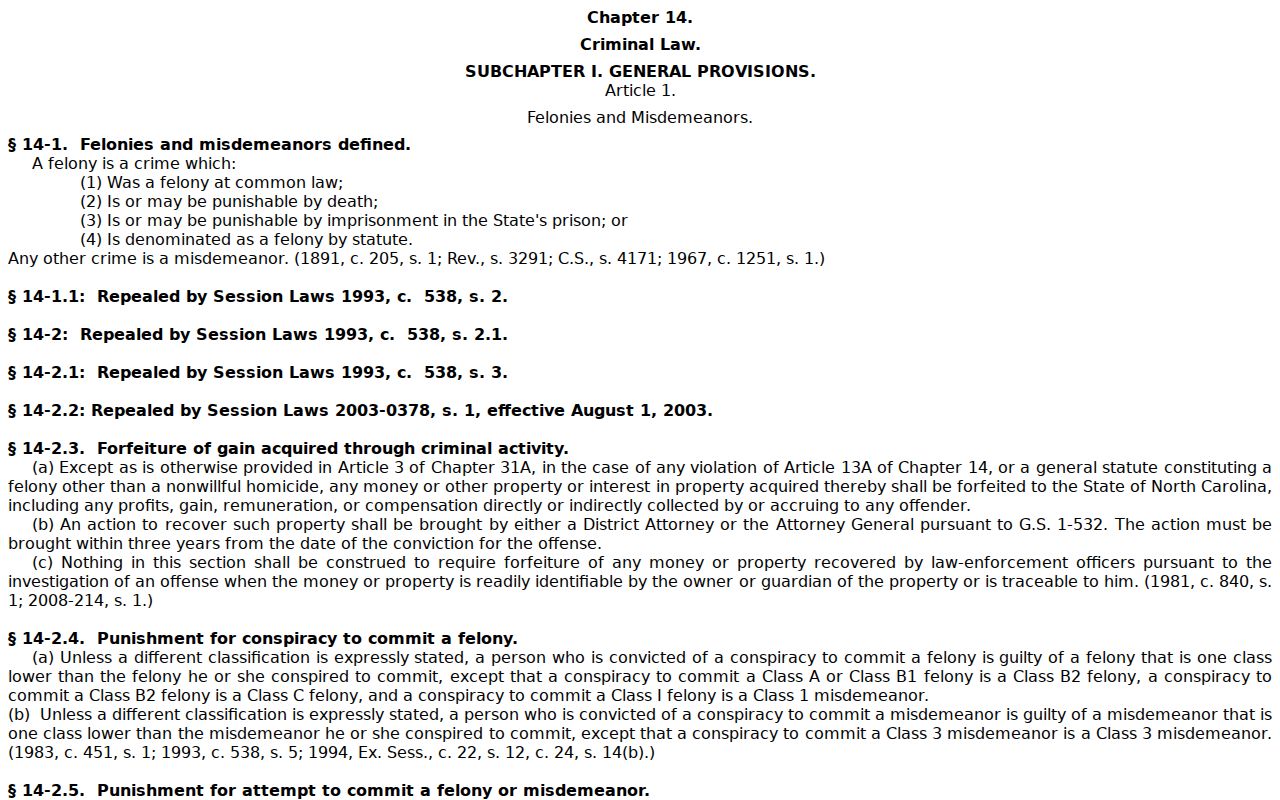
The statute is the controlling source when a Durham County profile or program label needs more context than the public result provides.
Durham Registry Has No Tiers
The common three-tier shorthand can mislead a Durham County searcher. A public profile may identify a program or status, but North Carolina's system is based on statutory programs and findings rather than a simple public risk-level map. The length of registration is not a score that predicts future conduct. It is a legal consequence tied to the governing classification.
A Part 2 registrant generally faces a 30-year period from initial county registration and may be eligible to petition after 10 years under statutory criteria. A petition is not an automatic deletion. Recidivist, aggravated-offense, and sexually violent-predator findings bring lifetime registration. Read the actual Durham County profile and Article 27A rather than converting its label to a federal tier.
Durham Registry Across State Lines
The U.S. Department of Justice National Sex Offender Public Website, or NSOPW, supplies the cross-state layer when a Durham County question reaches beyond North Carolina. It searches participating jurisdiction websites through one national interface. The North Carolina SBI registry remains the more direct source for a Durham address, local status, and the state's own profile fields.
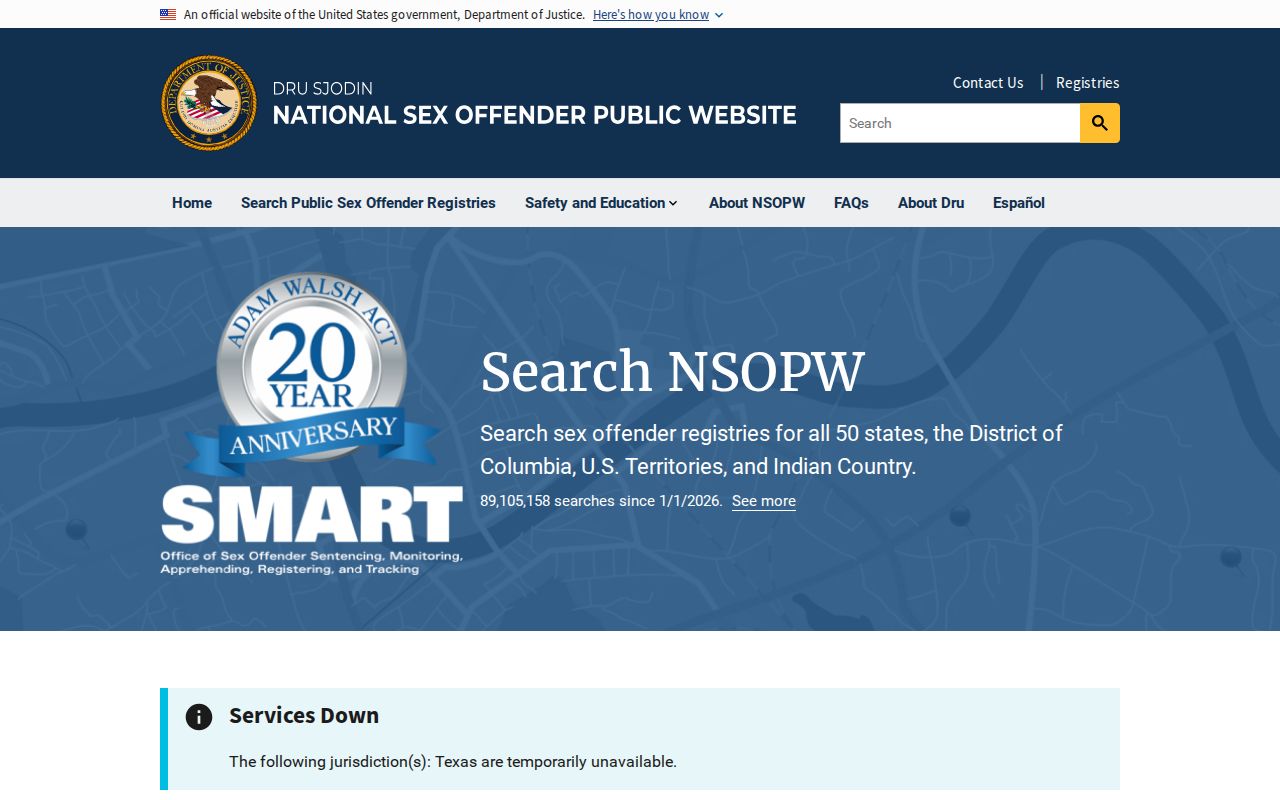
The national view helps when a move or past address crosses a state line, while Durham County corrections still belong with the local sheriff and SBI system.
For Durham County research, these two channels answer related but distinct questions. Start with SBI for a Durham County registry record. Add NSOPW when the search area spans another state or when a person may have registered in a different jurisdiction. In either system, an absent Durham County result is not proof that no qualifying or nonpublic history exists.
Durham Registry Residency Rules
G.S. 14-208.18 should not be summarized as a flat rule that every registrant must live a set distance from every school or park. The statute restricts certain registrants from specified places and activities. The exact application depends on the person's legal category and the kind of place involved. Durham County residents should use the current statute and seek case-specific guidance from the sheriff or an attorney rather than drawing a boundary from a general web map.
The SBI registry statistics and public-data page provides aggregate registry tools that can be filtered for Durham County, with stated limits.
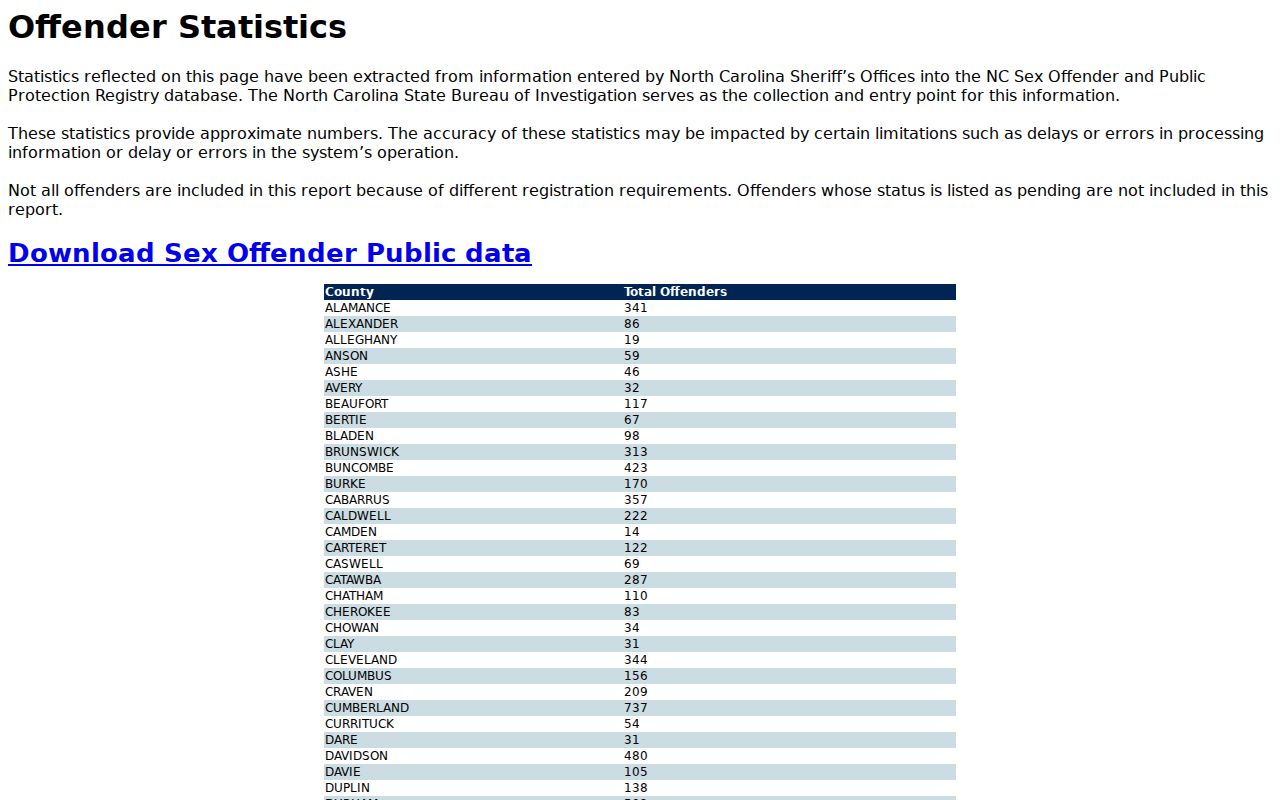
Aggregate Durham County data can describe the registry population, but it cannot decide how a premises rule applies to one person or address.
Lawful Use and Community Notification
Durham County registry records support personal, family, and community awareness. They do not grant a right to confront, follow, threaten, or punish anyone. Durham County searchers should use public profiles and address alerts to understand reported registration facts, then send suspected errors or noncompliance to the Durham County sheriff. A listed Durham County address does not promise that an area is risk-free, and a current Durham County search may lag behind a recent change.
The SBI registry's official lawful-use warning says that using the information to threaten, intimidate, stalk, or harass can result in criminal prosecution. Chapter 14, Article 27A supplies the registration framework, while other criminal laws may apply to misuse. Durham County residents should report facts to law enforcement instead of taking action against a person or household.
Misuse can be prosecuted: The SBI warns that threatening, intimidating, stalking, or harassing a registrant or household with registry information may lead to criminal prosecution under North Carolina law. Report suspected violations to the Durham County Sheriff instead.